Welcome
to the Tompkins County Climate Protection Initiative
309 North Aurora Street | Ithaca, NY 14850 | info@tccpi.org
New Protected Natural Areas and Trails Proposed for Tompkins County
A little bit more of Tompkins County is set to be preserved after a committee of county legislators recommended the county appropriate $94,000 towards the acquisition of three parcels by the Finger Lakes Land Trust, a conservation nonprofit.
The properties, located in the Town of Newfield, the Town of Danby and the Town of Caroline, compose 234 acres in total and contain a variety of different ecosystems, from woodlands to wetlands to gorges. Some of the land will also see the development of new trails, though most will remain in its natural state.
Legislators voted unanimously to recommend funding for the acquisitions during an Aug. 6 committee meeting. The full legislature is expected to take the final votes at its Aug. 18 meeting. Editor's note: The full legislature voted in favor of this acquisition at the meeting.
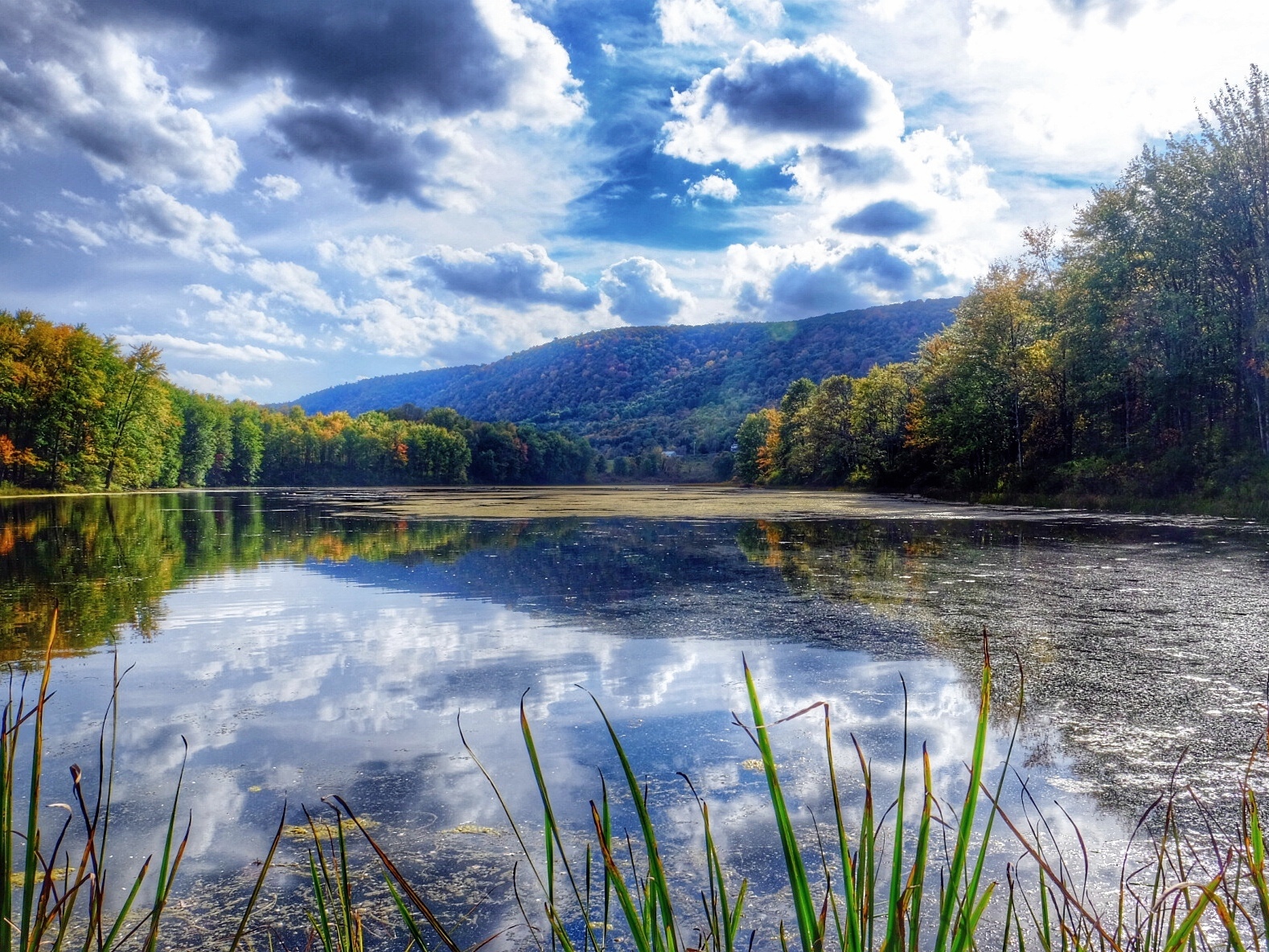
The Finger Lakes Land Trust (FLLT) is an Ithaca-based nonprofit whose goal is to protect the region’s natural resources. The organization has so far helped preserve over 35,000 acres across the region.
In addition to the county funding, the land trust received several state grants to offset the purchases — some of which have already been finalized.
The county’s funding will come from its Natural Infrastructure Capital Program. The program was originally established in 2017 to protect natural areas that can mitigate the adverse effects of climate change.
Tompkins County Commissioner of Planning and Sustainability Katherine Borgella said plants and animals have a better chance of survival in a changing climate when larger swaths of habitat are preserved.
“Protecting forests and vegetative natural lands is a relatively inexpensive way to retain stormwater upstream to mitigate the impact of flooding downstream, as well as reduce the amount of sediment going into our waters,” Borgella said.
The county’s capital program has helped fund the protection of 1,700 acres so far. In previous years, the county has allocated $200,000 annually to the program, but contributions have been on pause since 2024 because of budgetary constraints.
When the county officials first implemented the pause, they intended to restart regular contributions into the fund by 2027, Borgella said.
At the Aug. 6 meeting, Tompkins County Legislator and Committee Chair Irene Weiser reiterated the importance of preserving the county’s natural areas for their practical and economic benefits.
“We’re here in large part because we enjoy the natural surroundings and value the clean air, the clean water, all of the things that we get to enjoy,” Weiser said. “That’s thanks to programs like this.”
In an interview, Weiser said she thinks it is valuable to think of preserved natural lands as essential infrastructure, akin to man-made infrastructure like bridges and ditches.
“Preserving wetlands does a lot of things that are irreplaceable,” Weiser said. “[Those duties] can only be poorly mimicked by any kind of engineering projects.
-Fernando Figueroa, Ithaca Voice, 8/6/26
A little bit more of Tompkins County is set to be preserved after a committee of county legislators recommended the county appropriate $94,000 towards the acquisition of three parcels by the Finger Lakes Land Trust, a conservation nonprofit.
The properties, located in the Town of Newfield, the Town of Danby and the Town of Caroline, compose 234 acres in total and contain a variety of different ecosystems, from woodlands to wetlands to gorges. Some of the land will also see the development of new trails, though most will remain in its natural state.
Legislators voted unanimously to recommend funding for the acquisitions during an Aug. 6 committee meeting. The full legislature is expected to take the final votes at its Aug. 18 meeting. Editor's note: The full legislature voted in favor of this acquisition at the meeting.
The Finger Lakes Land Trust (FLLT) is an Ithaca-based nonprofit whose goal is to protect the region’s natural resources. The organization has so far helped preserve over 35,000 acres across the region.
In addition to the county funding, the land trust received several state grants to offset the purchases — some of which have already been finalized.
The county’s funding will come from its Natural Infrastructure Capital Program. The program was originally established in 2017 to protect natural areas that can mitigate the adverse effects of climate change.
Tompkins County Commissioner of Planning and Sustainability Katherine Borgella said plants and animals have a better chance of survival in a changing climate when larger swaths of habitat are preserved.
“Protecting forests and vegetative natural lands is a relatively inexpensive way to retain stormwater upstream to mitigate the impact of flooding downstream, as well as reduce the amount of sediment going into our waters,” Borgella said.
The county’s capital program has helped fund the protection of 1,700 acres so far. In previous years, the county has allocated $200,000 annually to the program, but contributions have been on pause since 2024 because of budgetary constraints.
When the county officials first implemented the pause, they intended to restart regular contributions into the fund by 2027, Borgella said.
At the Aug. 6 meeting, Tompkins County Legislator and Committee Chair Irene Weiser reiterated the importance of preserving the county’s natural areas for their practical and economic benefits.
“We’re here in large part because we enjoy the natural surroundings and value the clean air, the clean water, all of the things that we get to enjoy,” Weiser said. “That’s thanks to programs like this.”
In an interview, Weiser said she thinks it is valuable to think of preserved natural lands as essential infrastructure, akin to man-made infrastructure like bridges and ditches.
“Preserving wetlands does a lot of things that are irreplaceable,” Weiser said. “[Those duties] can only be poorly mimicked by any kind of engineering projects.
-Fernando Figueroa, Ithaca Voice, 8/6/26
News and Events
Cornell Climate Steward Trainings Fall 2026
Cornell Cooperative Extension (CCE) Tompkins County is organizing a training for Cornell Climate Stewards volunteers.
Cornell Climate Stewards is a volunteer program open to all NY residents fostering direct community action on climate change. Stewards are trained, certified, and supported by CCE to implement a wide range of mitigation and adaptation projects in their communities.
CCE Tompkins County will be training a new cohort of Climate Stewards in the fall of 2026. Want to get involved? Let us know by filling out the interest form at bit.ly/cornellCS, or email rl988@cornell.edu for more information.

When: Fall 2026. Sessions are 2 hours long, once a week.
Where: Virtual (possible in-person final meeting depending on your county educator)
Schedule: Wednesdays 6 PM – 8 PM
Module 1: Program Orientation
Module 2: Background Science
Module 3: Impacts Part 1
Module 4: Impacts Part 2
Module5: Working with Local Governments & Communities
Module 6: Intro to Mitigation
Module 7: Local Community Mitigation Strategies
Module 8: Intro to Adaptation
Module 9: Local Community Adaptation Strategies
Module 10: Effective Science Communication
Module 11: Planning Volunteer Projects
Module 12: Presentations, Recognition, Evaluation (possible in-person option)

Next TCCPI Meeting
Friday,October 30, 2026
9:00 - 11:00 am
The monthly TCCPI meetings have moved online. For Zoom info, contact Peter Bardaglio, the TCCPI coordinator, for further details at pbardaglio@gmail.com.
If you have any issues you would like to bring to the TCCPI monthly meetings, please e-mail us at info@tccpi.org. General meetings are on the last Friday of every month, except for November and December. Because of the holidays, the November-December meeting is held on the second Friday of December.
The Ithaca 2030 District

Visit TCCPI's latest project, the Ithaca 2030 District, an interdisciplinary public-private collaboration working to create a groundbreaking high-performance building district in Downtown Ithaca.
Cornell Cooperative Extension (CCE) Tompkins County is organizing a training for Cornell Climate Stewards volunteers.
Cornell Climate Stewards is a volunteer program open to all NY residents fostering direct community action on climate change. Stewards are trained, certified, and supported by CCE to implement a wide range of mitigation and adaptation projects in their communities.
CCE Tompkins County will be training a new cohort of Climate Stewards in the fall of 2026. Want to get involved? Let us know by filling out the interest form at bit.ly/cornellCS, or email rl988@cornell.edu for more information.
When: Fall 2026. Sessions are 2 hours long, once a week.
Where: Virtual (possible in-person final meeting depending on your county educator)
Schedule: Wednesdays 6 PM – 8 PM
Module 1: Program Orientation
Module 2: Background Science
Module 3: Impacts Part 1
Module 4: Impacts Part 2
Module5: Working with Local Governments & Communities
Module 6: Intro to Mitigation
Module 7: Local Community Mitigation Strategies
Module 8: Intro to Adaptation
Module 9: Local Community Adaptation Strategies
Module 10: Effective Science Communication
Module 11: Planning Volunteer Projects
Module 12: Presentations, Recognition, Evaluation (possible in-person option)
Next TCCPI Meeting
Friday,October 30, 2026
9:00 - 11:00 am
The monthly TCCPI meetings have moved online. For Zoom info, contact Peter Bardaglio, the TCCPI coordinator, for further details at pbardaglio@gmail.com.
If you have any issues you would like to bring to the TCCPI monthly meetings, please e-mail us at info@tccpi.org. General meetings are on the last Friday of every month, except for November and December. Because of the holidays, the November-December meeting is held on the second Friday of December.
The Ithaca 2030 District
Visit TCCPI's latest project, the Ithaca 2030 District, an interdisciplinary public-private collaboration working to create a groundbreaking high-performance building district in Downtown Ithaca.
Copyright © Tompkins County Climate Protection Initiative. All rights reserved.